


U.S. Securities and Exchange Commission 8-K Intelligence Repository
DarCache 8-K
Benchmark Your External Risk Against Real-World SEC Form 8-K Item 1.05 Disclosures
Under the SEC’s cybersecurity disclosure rules, public companies must report material cybersecurity incidents on Form 8-K Item 1.05 within four business days of determining materiality, detailing the nature, scope, timing, and material impact (or reasonably likely impact) on financial condition, operations, and reputation.
ThreatNG’s DarCache 8-K is a continuously updated intelligence repository of SEC Form 8-K Item 1.05 filings. Rather than relying on fragmented news or static spreadsheets, DarCache 8-K gives CISOs, General Counsel, risk teams, and MSSPs structured visibility into the cyber incidents, attack techniques, and business impacts disclosed by publicly traded companies. When correlated with your live external attack surface through ThreatNG’s Context Engine™ and DarChain, DarCache 8-K closes the Contextual Certainty Deficit™, turning public regulatory disclosures into actionable peer benchmarking, supply chain early warning, and board-ready context.
What DarCache 8-K Delivers
Proactive Threat Intelligence
Gain structured insights into emerging cyber threats, attack techniques, and operational disruptions disclosed by publicly traded companies, allowing you to strengthen defenses before similar tactics target your organization.
Ecosystem-Wide Risk Assessment
Monitor Form 8-K Item 1.05 disclosures across industry peers, third-party vendors, and your broader supply chain to spot systemic risks early and assess downstream exposure.
Improved Vulnerability Prioritization
Support your legal and executive teams during the four-business-day disclosure window by benchmarking your live external exposures against real-world peer disclosures to help determine whether an event warrants a mandatory Item 1.05 filing or a voluntary Item 8.01 disclosure.
How DarCache 8-K Powers the ThreatNG Platform
DarCache 8-K is not a standalone static feed. It is a core DarCache Intelligence Repository woven directly into ThreatNG’s 100% connectorless, outside-in platform:
Sentiment and Financials Investigation Module: Surfaces SEC Form 8-K filings alongside Form 10-K data, ESG violations, publicly disclosed lawsuits, and layoff chatter to quantify external reputational and financial risk.
Security Ratings (A–F): Directly inform ThreatNG’s Brand Damage Susceptibility and Data Leak Susceptibility ratings, reflecting real-world regulatory and disclosure exposure.
Context Engine™ & DarChain: Correlates historical SEC 8-K disclosures with your live external technical findings such as exposed cloud buckets, compromised credentials, or vulnerable subdomains to deliver Legal-Grade Attribution and prioritized attack paths.
ThreatNG Risk Fabric API (For MSSPs & OEMs): Embed DarCache 8-K directly into your existing SIEM, SOAR, or proprietary risk platforms via API to enrich client reporting without the overhead of manual regulatory tracking.
Built for Enterprises and MSSPs

For the Enterprise: Align Cyber Reality with Boardroom Governance
When a cyber incident occurs, security and legal teams must evaluate both quantitative financial impacts and qualitative factors such as reputational damage, vendor relationships, and regulatory scrutiny without unreasonable delay.
Peer Benchmarking: Reference how comparable public companies have described the nature, scope, and impact of material incidents in EDGAR filings.
Third-Party Early Warning: Identify when a critical supplier or partner discloses a material incident so you can proactively assess your own exposure.
Audit-Ready Due Diligence: Pair DarCache 8-K with ThreatNG’s SEC Cybersecurity Disclosures Report to align your public regulatory narrative with the verifiable technical reality of your external attack surface.
For MSSPs: Elevate from Alert Delivery to Governance Advisory
Clients are exhausted by the "Hidden Tax" of contextless alerts. DarCache 8-K helps you translate external risk into executive language.
API-First Enrichment: Integrate DarCache 8-K via the ThreatNG Risk Fabric API to connect external exposures to real-world public company disclosures.
Strategic Compliance Conversations: Help clients prepare for SEC oversight and board reporting using verified, public-company disclosure precedent.
Sharper Triage: Combine DarCache 8-K with ThreatNG’s DarCache Vulnerability (NVD, EPSS, KEV, PoC) and DarChain to focus analyst hours on exposures with real business consequences.

Frequently Asked Questions: Mastering SEC Form 8-K Cybersecurity Disclosures
-
Under the Supreme Court standard cited by the SEC, information is material if there is a substantial likelihood that a reasonable shareholder would consider it important in making an investment decision, or if it would significantly alter the "total mix" of information available. Registrants must evaluate both quantitative financial impacts and qualitative factors—including harm to reputation, customer or vendor relationships, competitiveness, and potential litigation or regulatory actions.
-
The filing deadline is tied to the registrant’s determination that an incident is material—not the initial date of discovery. Companies must make that materiality determination "without unreasonable delay" and file Form 8-K Item 1.05 within four business days of that determination. Limited delays are permitted only if the U.S. Attorney General notifies the SEC in writing that immediate disclosure poses a substantial risk to national security or public safety.
-
Per SEC Division of Corporation Finance guidance, Item 1.05 is reserved strictly for incidents determined to be material. If a company chooses to voluntarily disclose an incident that it has determined is not material—or for which a materiality determination has not yet been made—the SEC encourages filing under a different item, such as Item 8.01, to avoid confusing investors.
-
DarCache 8-K does not replace legal counsel; it equips security and legal teams with a continuously updated repository of real-world SEC Form 8-K Item 1.05 filings. By correlating this repository with your live, connectorless external attack surface data, ThreatNG provides the peer context, supply chain visibility, and Legal-Grade Attribution needed to support defensible governance decisions.
-
No. Even if a ransom payment ends an attack before a materiality determination is completed, the company must still assess the incident’s materiality and file under Item 1.05 within four business days if it is deemed material.

DarCache Dark Web: Scans underground for threats to your brand, VIPs, and assets.

DarCache ESG: Tracks Environmental, Social, and Governance violations that signal broader risk culture issues.

DarCache Ransomware: Tracks active gangs and their specific TTPs to move defense from reactive to proactive.

DarCache Rupture: Monitors for compromised credentials and data leaks that lead to initial access.

DarCache Breach eXposure: Evaluates exposure by isolating specific named breach events to identify which organizational accounts are in the blast radius.
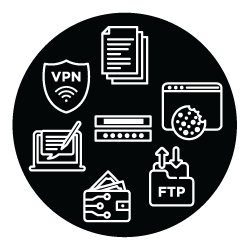
DarCache Infostealer. Parses dark web logs for compromised credentials and session tokens to deliver legal-grade attribution that empowers security teams to proactively neutralize threats.

DarCache Vulnerability: Fuses NVD, EPSS, KEV, and PoC Exploit data to prioritize patching based on active exploitation.

DarCache Mobile: Detects hardcoded secrets, API keys, and platform identifiers in mobile applications.

DarCache Bug Bounty: Aggregates data on assets under active scrutiny by the researcher community.

DarCacvhe BIN: Monitors Bank Identification Numbers to detect and prevent payment fraud.