




Security Ratings
Reclaim Your Cyber Narrative: Defeat Black Box Security Ratings with Legal-Grade Attribution
Your current investments in External Attack Surface Management (EASM) and Threat Intelligence are absolutely foundational, and subscribing to industry-standard rating agencies is a necessary reality for third-party risk management (TPRM) and board reporting. But what happens when a blind algorithm drops your score overnight, penalizing your organization for a divested subsidiary, a third-party vendor's mistake, or a safely air-gapped legacy system? You become a victim of the Contextual Certainty Deficit, which forces you to waste countless hours manually gathering evidence just to dispute an algorithmic false positive. ThreatNG is your dedicated "Credit Repair Lawyer" for cybersecurity. We partner with your team against unforgiving, context-blind scanners, providing the definitive blueprint and the forensic proof you need to stop reactive firefighting, cure alert fatigue, and take absolute, permanent control of your digital reputation.

Secure the "Grace Period" Before the Auditors Arrive (Opportunity)
Legacy rating agencies scan your perimeter on a slow, periodic cycle, leaving you vulnerable to sudden score drops that can instantly derail enterprise contracts or skyrocket your cyber insurance premiums. ThreatNG continuously maps your dynamic cloud environment and discovers Shadow IT, exposed API keys, and dangling CNAME records before external auditors do. Experience the profound peace of mind that comes with our continuous "pre-flight check," granting you the crucial grace period needed to silently remediate issues. Do not let a blind algorithm dictate your business reality.
Dismantle False Positives with Legal-Grade Attribution (Refutation)
Stop paying the hidden tax on your Security Operations Center (SOC). When a rigid rating agency dumps a "pile of bricks" on your desk and penalizes you for an asset you do not actually own, ThreatNG provides the irrefutable forensic evidence to fight back. By combining technical findings with important financial and legal context, such as Domain Records Vendor Mapping, Archive Web Pages, and SEC 8-K Filings, we automate the generation of Legal-Grade Attribution. We empower you to confidently audit the auditors, forcing rating agencies to correct their algorithmic errors and transforming you from a frustrated victim into a proactive defender.
Transform Raw Vulnerabilities into a Defensible Governance Blueprint (Bolstering)
Standard External Attack Surface Management (EASM) scanners see an open port and automatically issue a critical penalty, completely blind to the strategic intent of your security architecture. ThreatNG champions your defensive strategies. Using our proprietary DarChain Attack Path Intelligence, you can move beyond flat lists of CVEs. DarChain accurately maps the exploit chain, enabling you to definitively prove to insurers and board members that compensating controls, such as an active Web Application Firewall or network segmentation, effectively neutralize the theoretical threat. Turn a perceived vulnerability into a proud demonstration of true risk governance.
The ThreatNG Difference: From the "Pile of Bricks" to the "Blueprint"
In a market obsessed with selling fear and alarmist threat feeds, most cybersecurity tools simply generate more noise. They dump a "pile of bricks" (thousands of contextless vulnerabilities) in your driveway and leave you to figure out if your house is collapsing.
ThreatNG provides the Blueprint.
By automatically correlating external technical security findings with decisive legal, financial, and operational context via our Context Engine™, we deliver absolute certainty. Stop chasing ghost assets. Protect your cyber insurance renewals, secure your vendor relationships, and confidently govern your true enterprise risk.
The ThreatNG Pre-Flight Check: Empowering Internal Ratings to Defeat the Black Box
While legacy rating agencies use unforgiving, context-blind algorithms to punish your organization for unverified metadata, ThreatNG's proprietary Security Ratings (A-F) serve as your ultimate operational "pre-flight" check.

The Apex Metric:
The ThreatNG Exposure Rating
Standard external scores leave you with a fragmented, incomplete picture of your risk. You need a single, irrefutable metric that synthesizes your entire attack surface into a unified narrative of resilience. The ThreatNG Exposure Rating represents the culmination of our platform. It is an overarching and holistic A-F grade derived from the continuous aggregation of all individual ThreatNG security ratings.
When you walk into a board meeting, a critical vendor negotiation, or a cyber insurance renewal, this is your definitive proof of proactive governance. It translates chaotic technical telemetry into a unified, board-ready business metric, delivering the profound peace of mind that you have absolute control over your entire digital ecosystem.
This ultimate barometer is dynamically calculated by continuously evaluating the following specialized internal ratings, granting your team the crucial "Grace Period" to find, refute, and bolster your defenses before external auditors or threat actors arrive:

Subdomain Takeover Susceptibility
Continuously hunts for dangling CNAMEs and unclaimed third-party services, empowering you to silently secure abandoned cloud infrastructure before hijackers or blind algorithms can weaponize them.

Mobile App Exposure
Evaluates marketplaces to detect hardcoded secrets and malicious imitations, letting you issue rapid takedowns and protect your true perimeter.

Web Application Hijack Susceptibility
Assesses the real-world exploitability of your web applications, enabling you to demonstrate that compensating controls fully neutralize the threat.

BEC & Phishing Susceptibility
Proactively evaluates compromised credentials on the dark web, missing DMARC/SPF records, and registered domain permutations to block wire fraud and targeted spear-phishing campaigns.

Brand Damage Susceptibility
Acts as your shield against typosquatting, negative news, and impersonations, ensuring you are never penalized for defensive domain registrations.
Data Leak Susceptibility
Continuously evaluates exposed open cloud buckets, GitHub repositories, and SaaS applications for accidentally leaked code secrets and API keys.

Cyber Risk Exposure
The definitive barometer for your holistic digital perimeter, synthesizing your total external risk from invalid TLS certificates to exposed RDP ports.

Non-Human Identity Exposure
Secures the invisible perimeter by evaluating exposure to high-privilege machine identities, such as leaked API keys and service accounts.

Breach & Ransomware Susceptibility
Correlates your specific exposed ports and vulnerabilities against active ransomware gang activity, verified proof-of-concept exploits, and compromised credentials.

Supply Chain & Third Party Exposure
Gives you the Legal-Grade Attribution required to irrefutably prove that a flagged asset actually belongs to a third-party SaaS provider or a divested entity.

ESG Exposure
Monitors publicly disclosed Environmental, Social, and Governance (ESG) violations, protecting your corporate integrity from regulatory scrutiny and targeted reputational damage.
The Engine of Certainty: Investigation Modules and Intelligence Repositories
While legacy rating agencies rely on shallow, generic scans, ThreatNG’s Security Ratings are fueled by a deep, interconnected ecosystem of specialized Investigation Modules and Intelligence Repositories. We don’t just look at surface-level hygiene; we hunt for active threats and provide the forensic context necessary to calculate your true risk exposure.

Investigation Modules
ThreatNG uses purely external, unauthenticated discovery to map your attack surface across multiple vectors :

Domain Intelligence and Subdomain Intelligence
Maps your true perimeter, uncovering forgotten cloud hosting, Web3 domains, DNS records, and Subdomain Takeover susceptibilities before attackers exploit them.



Cloud, SaaS, and Technology Exposure
Identifies "Shadow IT", exposed cloud buckets, and enumerates nearly 4,000 technologies (including WAF discovery), ensuring no asset is left unmonitored.
Social Media and Sentiment Analysis
Monitors LinkedIn, Reddit, and public filings (like SEC 8-Ks) to gauge narrative risk, executive exposure, and ESG compliance.
Sensitive Code Exposure and Mobile App Discovery
Hunts for hardcoded API keys, leaked secrets, and rogue mobile binaries across public code repositories and app marketplaces.




Dark Web and Online Sharing Exposure
Continuously scans the dark web, paste sites, and underground forums for compromised credentials and threat actor chatter targeting your brand.

Intelligence Repositories
DarCache - The Threat Context
These continuously updated repositories fuse raw data with real-world threat intelligence to fuel our Context Engine™ :
DarCache Vulnerability
Cuts through the noise of CVEs by fusing NVD severity, EPSS predictive scoring, KEV active exploitation data, and verified Proof-of-Concepts (PoCs) into a definitive Decision-Ready Verdict.

DarCache Ransomware
Tracks the specific tactics, techniques, and procedures (TTPs) of over 100 active ransomware gangs, correlating your exposures with real-world extortion threats.
DarCache Rupture (Compromised Credentials)
Maintains a continuously updated database of breached organizational emails and passwords to accurately calculate your BEC & Phishing Susceptibility.
DarCache Infostealer
Aggregates data from malware logs to identify active infections where infostealers have exfiltrated valid session cookies and login details from employee or customer devices. Detecting these specific indicators allows security teams to revoke compromised sessions and prevent account takeovers that might otherwise bypass Multi-Factor Authentication (MFA).



The Correlation Evidence Questionnaire (CEQ): Ending the Era of "Measurement Theater"
Are your vendor assessments based on reality, or just measurement theater? The ThreatNG Correlation Evidence Questionnaire (CEQ) rejects static, claims-based assessments. By leveraging our proprietary Context Engine™, we find irrefutable, observed evidence of external risk across your digital attack surface, automatically cross-referencing written answers against observable technical reality.

Positive Security Indicators: Championing Your Defenses
Standard scanners only look for what is broken, penalizing you for context-blind assumptions. ThreatNG actively looks for what you are doing right. Our Positive Security Indicators automatically detect and highlight your beneficial security controls, such as active Web Application Firewalls (WAFs), Multi-Factor Authentication (MFA), and active Bug Bounty programs. We validate your measures from the perspective of an external attacker, providing objective evidence of your security maturity to insurers and partners.

Bridging the 'Attribution Chasm' with the Context Engine™
For too long, critical risk data has been hoarded behind proprietary paywalls, creating an 'Attribution Chasm' that leaves CISOs vulnerable to blind algorithmic assumptions. The ThreatNG Context Engine™ fuses technical findings with decisive legal, financial, and operational context. By using Multi-Source Data Fusion, we transform ambiguous security findings into the irrefutable proof you need to defend your narrative and justify your security investments.

External Adversary View & MITRE ATT&CK Mapping
Stop chasing arbitrary hygiene scores and start disrupting the actual path an attacker would take. ThreatNG automatically translates raw findings on your external attack surface into a strategic narrative of adversary behavior. By correlating your exposures with specific MITRE ATT&CK techniques, we empower you to prioritize threats based on their likelihood of exploitation, moving defense timelines upstream to break the kill chain before a crisis occurs.

External GRC Assessment: Eliminate Your Most Dangerous Blind Spot
Your internal Governance, Risk, and Compliance (GRC) programs are foundational to your business, but are you relying on a periodic, internal checklist to protect you from real-time, external regulatory fines? Traditional GRC tools leave a critical blind spot by failing to account for the unauthenticated, external attack surface. ThreatNG’s External GRC Assessment provides the definitive attacker's viewpoint, continuously uncovering the 'Shadow IT' and misconfigurations that bypass your internal controls. We eliminate manual effort in audit preparation by automatically mapping external technical findings to relevant regulatory frameworks, including PCI DSS, GDPR, HIPAA, NIST CSF, and SOC 2. For instance, if a forgotten database is exposed to the public internet, ThreatNG instantly flags it as a violation of PCI DSS Requirement 1.2.1. Replace the panic of audit fatigue with the profound relief of continuous compliance, ensuring you always possess the exact evidence required to confidently satisfy regulators, insurers, and your board of directors.






The Open-Source Governance and Compliance Dataset Project
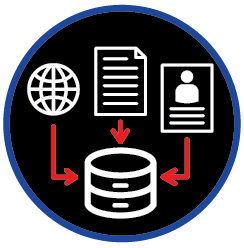
We believe that while the tools used to analyze risk can be proprietary, the evidence of that risk should be publicly available. ThreatNG is democratizing Open Source Intelligence (OSINT) by providing public access to primary-source intelligence, mapping everything from ESG Violations to U.S. State Data Breach Lists. Join a global alliance of researchers and risk managers collaborating against a common enemy, ensuring high-fidelity intelligence is never a privilege, but a standard.
Security Ratings Use Cases
The ThreatNG Blueprint: Operationalizing Your Cyber Narrative Across the Enterprise
In the high-stakes ecosystem of digital risk, security ratings should go beyond mere static scores and serve as a comprehensive, actionable blueprint for your business. Many standard tools inundate you with contextless alerts, creating a Contextual Certainty Deficit that keeps your team stuck in a cycle of reactive firefighting. ThreatNG changes the paradigm. We provide the exact forensic proof and continuous "pre-flight" intelligence you need to take absolute, permanent control of your digital narrative. Explore the use cases below to discover how ThreatNG's Legal-Grade Attribution empowers you to move from defensive uncertainty to proactive governance across every facet of your organization.
Security Ratings Categories
Proactively Manage, Refute, and Defend Your External Risk Posture
In the high-stakes ecosystem of third-party risk management (TPRM), security ratings act as the public credit score of your cyber posture. However, external automated scans often lack the internal context of your environment, penalizing organizations for generic assumptions without observing mitigating controls. The ThreatNG Security Ratings ecosystem empowers you to move from a reactive stance to a proactive strategy by integrating continuous discovery with rigorous, policy-driven governance. By exploring the categories below, you will discover how to proactively find opportunities, challenge inaccuracies with forensic refutation, and demonstrate context and control to bolster your defense narrative.
Click on any of the categories below to learn how ThreatNG helps you take control of your narrative across your attack surface:

Frequently Asked Questions (FAQ): Reclaiming Control of Your Cybersecurity Ratings
-
Your security rating likely dropped because legacy rating algorithms penalized you for an asset you do not actually own or control, such as a divested subsidiary, a shared cloud IP, or a third-party vendor's mistake.
While broad External Attack Surface Management (EASM) tools and rating agencies provide a necessary baseline, they operate as context-blind "credit bureaus". They rely on external metadata without internal business context, often resulting in severe, unjustified penalties for "Ghost Assets" or abandoned subdomains.ThreatNG eliminates the panic of these sudden drops by providing the exact legal-grade attribution needed to categorically prove ownership and reclaim permanent control over your digital narrative.
-
To successfully dispute a false positive on legacy rating platforms, you must provide forensic, auditable evidence proving the flagged asset is out of scope, divested, or fully protected by compensating controls.
Security teams currently waste an exorbitant amount of time—a "hidden tax" on the SOC—manually gathering server logs and DNS history just to fight unforgiving algorithms. ThreatNG acts as your dedicated "Credit Repair Lawyer" against these rigid systems. By integrating our Context Engine™ with intelligence like Domain Records Vendor Mapping and SEC 8-K filings, we automate the generation of irrefutable, legal-grade proof. This empowers you to confidently audit the auditors, forcing rating agencies to correct their algorithmic errors and transforming you from a frustrated victim into a proactive defender.
-
Context-blind outside-in scans can trigger unmerited failing grades in critical categories like Application Security, directly leading to skyrocketing cyber insurance premiums, stalled enterprise contracts, or outright coverage denial.
In today's reputational economy, cyber insurers rely exclusively on your external rating to underwrite risk. If an automated scraper misinterprets a safely isolated legacy system as a critical vulnerability, you stand to lose significant financial resources. ThreatNG protects your bottom line through continuous "pre-flight" checks. By finding hidden exposures before the external auditor's periodic scan ever detects them, ThreatNG grants you a crucial "grace period" to remediate the issue, ensuring a blind algorithm never dictates your business reality.
-
The Contextual Certainty Deficit is the industry-wide crisis in which security tools generate massive volumes of technical alerts without the decisive business context needed to understand and prioritize actual risk.
Standard EASM platforms dump a chaotic "pile of bricks"—thousands of contextless vulnerabilities—onto your desk, leaving security analysts exhausted by alert fatigue and "defensive uncertainty". ThreatNG solves this by providing the definitive blueprint. By fusing external technical findings with legal, financial, and operational context, ThreatNG delivers absolute certainty. Experience the profound relief of knowing exactly which threats matter, allowing your team to stop reactive firefighting and start governing true enterprise risk.
-
You can prove compensating controls by mapping the exact attack path of the flagged asset to demonstrate that defense-in-depth mechanisms, such as an active Web Application Firewall (WAF), effectively neutralize the threat.
A rigid rating agency scanner will often flag an open port or an outdated server header as a critical failure, completely missing the strategic intent of your security architecture. ThreatNG champions your defensive strategies. With ThreatNG's DarChain Attack Path Intelligence, you move beyond flat lists of CVEs. DarChain iteratively correlates exposures using a Finding -> Path -> Step -> Tool logic to definitively prove to auditors that the exploit path is broken by your compensating controls. This allows you to formally document the asset as a managed exception, giving you the operational pride of demonstrating true risk governance to your board of directors.
-
You can discover Shadow IT by leveraging continuous, unauthenticated external discovery, paired with dynamic entity management, to map your true digital footprint before official auditors or threat actors do.
Legacy rating agencies scan at a slow, periodic pace, while your decentralized cloud environment is constantly evolving. Every minute a dangling CNAME record, misconfigured S3 bucket, or exposed API key sits unnoticed on your perimeter is a ticking time bomb for a catastrophic rating penalty or data leak. ThreatNG continuously hunts for exposures related to the people, places, and brands you specifically define. This proactive opportunity-finding ensures you identify and secure rogue assets early, delivering the peace of mind that you are always in total command of your infrastructure.